
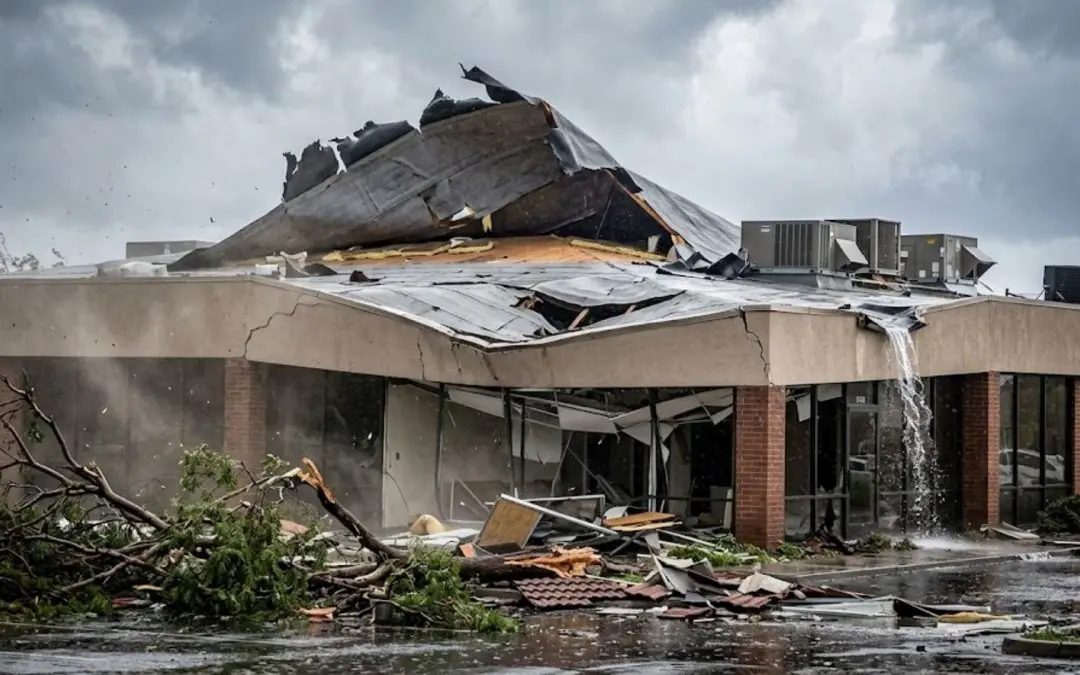
A wind event rolls through the Inland Empire overnight, and by morning a Redlands business owner finds water pooling under a loading dock roof or seeping through a cracked parapet wall. The building is still standing, but ceiling tiles are sagging and the smell of wet drywall is already spreading through the office. Storm damage rarely announces itself all at once, and commercial buildings tend to hide it behind suspended ceilings, HVAC units, and stockrooms until the problem is already spreading.
For a business, every hour a property sits wet or exposed to the weather adds to the cost, whether that shows up as spoiled inventory, halted operations, or materials that have to be torn out instead of dried. This article covers what commercial storm damage restoration in Redlands, CA actually involves, the warning signs property managers should watch for, and how our team at All American Mitigation approaches recovery for local businesses.
What Counts as Storm Damage on a Commercial Property
Storm damage covers a range of issues that can affect a commercial building after wind, rain, or hail moves through the area. It is rarely limited to one type of damage, since a single storm can create several overlapping problems at once.
1. Wind and Roof Damage
High wind can lift flashing, loosen roof membranes, and tear off vents or HVAC covers on flat commercial roofs. Once the roof surface is compromised, even a moderate rain event can send water into the building through gaps that were never designed to be exposed. Business owners often do not notice this damage until staining appears on interior ceilings.
2. Water Intrusion and Flooding
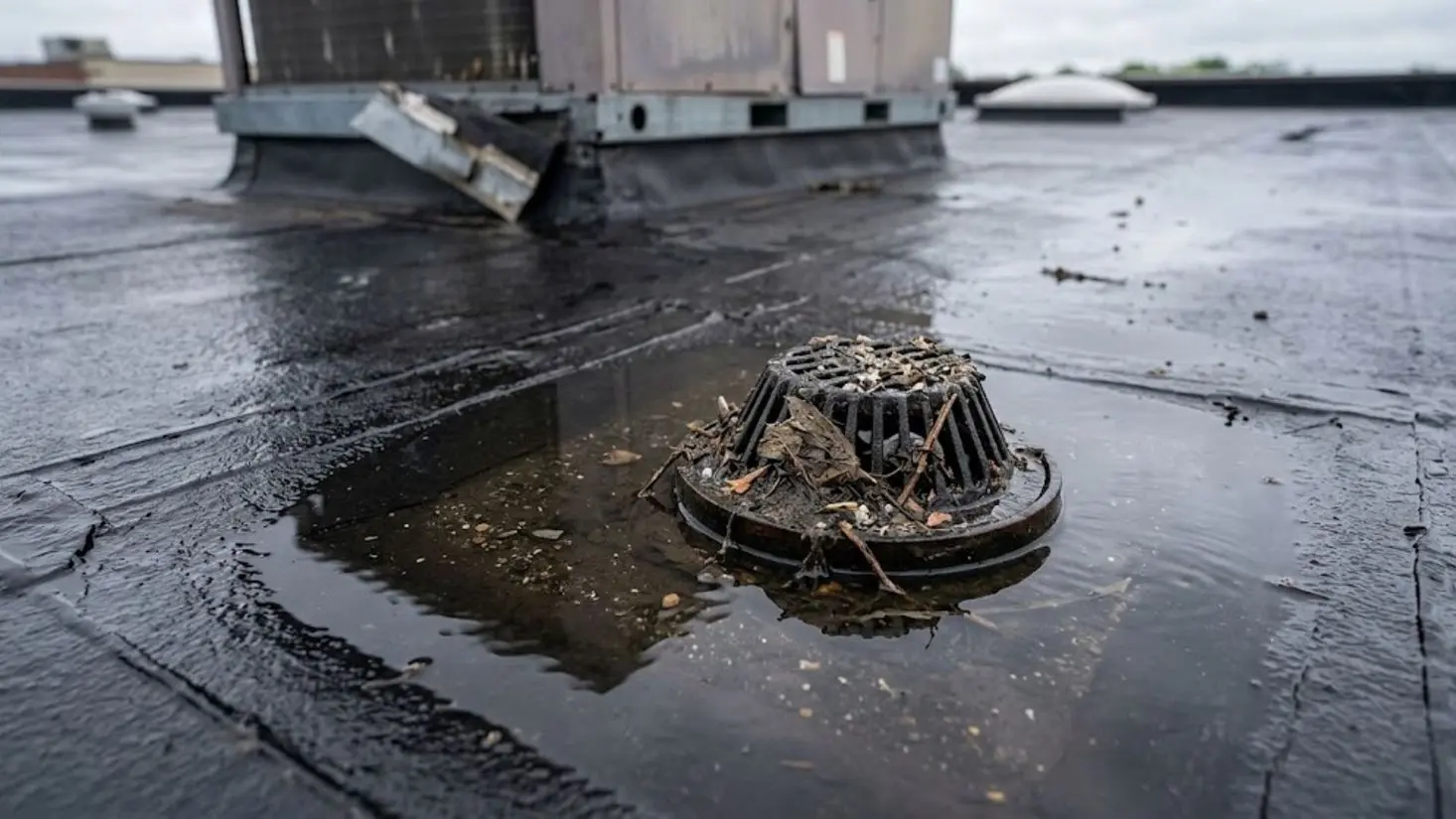
Storm runoff, clogged roof drains, and overwhelmed gutters are common causes of interior flooding in commercial spaces around Redlands. Water can travel along ceiling joists and wall cavities before it ever becomes visible, which means the wet area is often larger than what shows up on the surface.
3. Debris and Structural Impact
Wind-driven debris, downed branches, and shifting rooftop equipment can damage siding, windows, and structural elements. Beyond the immediate impact, any opening in the building envelope becomes another point where water can continue entering during future rain.
Why Commercial Storm Damage Needs a Fast Response
A flooded retail floor or a soaked stockroom is not just a repair issue, it is a business interruption issue. Inventory can be ruined, equipment can short out, and employees may not be able to safely work in the space until the moisture is addressed. Water that sits in ceiling tiles, carpet, or wall insulation for more than a day or two also creates the right conditions for mold growth, which adds another layer of cleanup and can affect indoor air quality throughout the building.
Commercial buildings also tend to have more complex systems than a typical home, including HVAC units, electrical rooms, and server or inventory storage areas, all of which need to be assessed separately during a storm damage response.
Our Commercial Storm Damage Restoration Process
We approach every commercial storm damage call with the same structured process, adjusted to the size and layout of the property.
1. Emergency Response
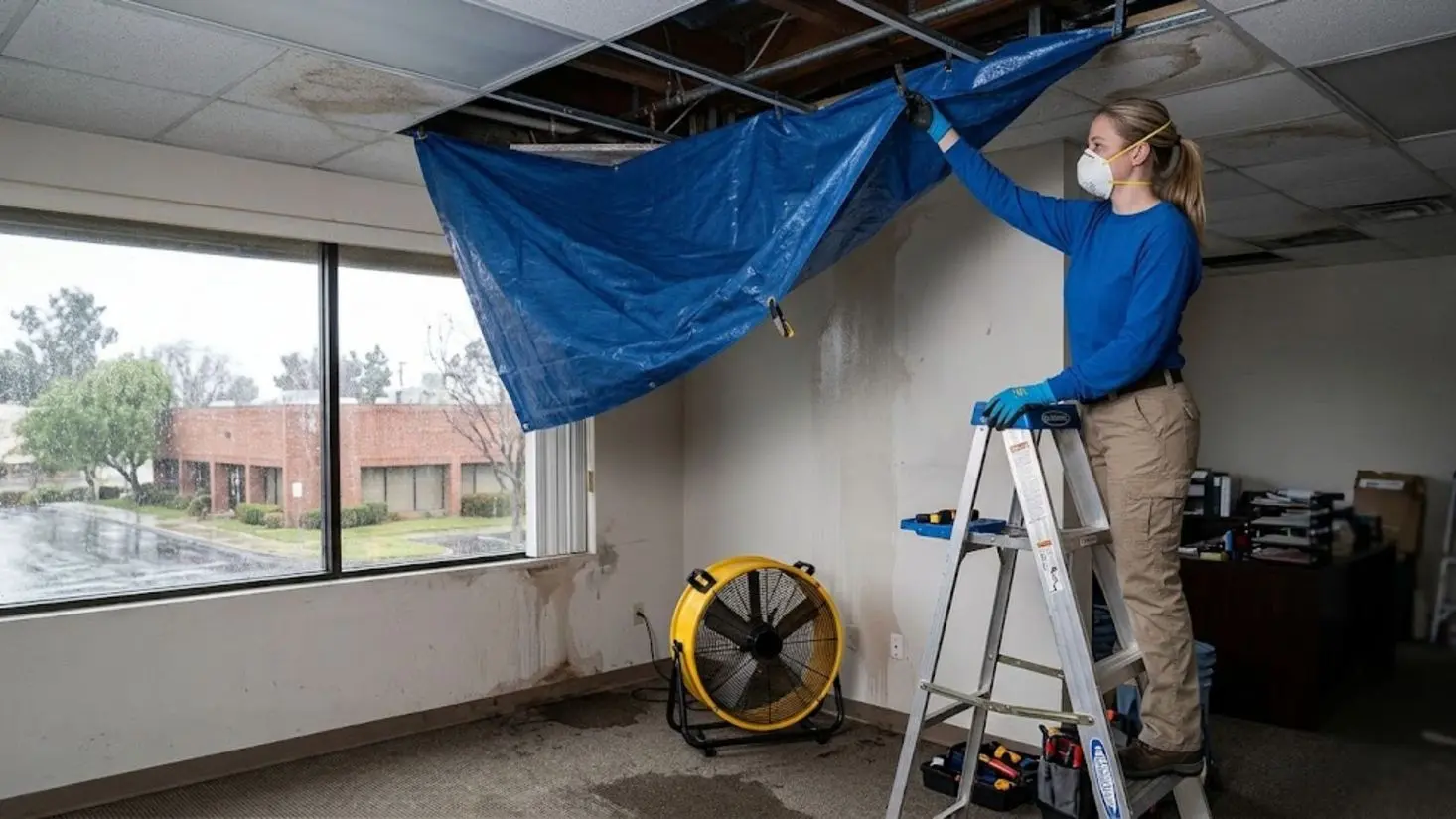
We dispatch a team to inspect the property, identify active water intrusion points, and stabilize the situation, including tarping or boarding where needed to stop ongoing damage.
2. Containment and Damage Control
Affected areas are contained to prevent water, debris, or contamination from spreading into unaffected parts of the building, which is especially important in multi-tenant or multi-room commercial spaces.
3. Mitigation and Cleanup
Standing water is extracted, damaged materials that cannot be salvaged are removed, and debris from the storm event is cleared from the affected areas.
4. Drying and Remediation
We use commercial-grade drying and dehumidification equipment along with moisture mapping to confirm that walls, flooring, and structural framing are fully dry, not just dry on the surface.
5. Full Restoration
Once the property is dry and stable, our reconstruction team repairs or rebuilds the affected areas to return the space to its pre-storm condition.
Restoration Services for Storm-Damaged Businesses
Depending on what the storm affected, a commercial restoration project can involve several of our services working together rather than a single fix.
- Emergency water extraction and structural drying
- Thermal imaging and moisture detection behind walls and ceilings
- Debris removal and damaged material disposal
- Sanitization and odor control for affected areas
- Mold prevention built into the drying process
- Full reconstruction and rebuild support for damaged structures
Because storm events often combine water intrusion with structural and even fire-related damage from downed electrical lines, our water damage restoration and reconstruction services are typically coordinated together rather than treated as separate projects.
Preventing Mold After a Commercial Storm Event
Moisture trapped behind commercial-grade insulation, above drop ceilings, or inside wall cavities can lead to mold growth within a day or two if it is not fully dried out. This is one of the reasons a professional drying process matters more than simply mopping up visible water. If mold has already developed by the time a business owner notices a problem, a dedicated mold remediation approach is needed alongside the storm cleanup itself to address the moisture source and the growth together.
Working Through the Insurance Process
Commercial storm claims often involve more documentation than a typical homeowner claim, particularly when business interruption or inventory loss is involved. As part of our reconstruction process, we document the damage as we find it and work with property owners through the claims process so the paperwork does not become another obstacle to reopening.
Frequently Asked Questions
How Quickly Should a Business Respond to Storm Damage?
As soon as it is safe to do so. Water and wind damage on a commercial property tends to get worse the longer it sits, especially once moisture reaches drywall, flooring, or electrical systems. Early mitigation reduces both the scope of repairs and the risk of mold developing in hard-to-reach areas.
Can a Business Stay Open During Storm Damage Restoration?
It depends on the extent of the damage and which areas of the building are affected. In many cases, unaffected sections of a property can remain operational while our team works in a contained area, though anywhere with active water intrusion or structural concerns needs to be cleared until it is safe.
What Is the Difference Between Storm Damage Restoration and Reconstruction?
Restoration addresses the immediate damage, water extraction, drying, debris removal, and stabilizing the property. Reconstruction is the rebuild phase that follows, repairing or replacing materials that could not be salvaged so the space returns to its pre-storm condition.
Does Storm Damage Always Involve Water?
Not always, but water is involved in most cases. Wind can also cause structural and debris damage without water intrusion, and lightning strikes can create electrical or fire damage. A full inspection after any storm event helps identify which type of damage is actually present.
Will Storm Damage Restoration Address Existing Roof Issues?
Our team focuses on the interior and structural damage caused by the storm itself. Any underlying roofing repairs needed to prevent future water intrusion are typically coordinated with a roofing contractor as part of the overall recovery plan.
Final Thoughts on Commercial Storm Damage Restoration in Redlands, CA
Storm damage on a commercial property rarely stays contained to one area, which is why a coordinated response matters more than a quick surface cleanup. Addressing water intrusion, structural damage, and the risk of mold together, rather than one at a time, gives a business the best chance of reopening without repeat problems down the line. If a recent storm has left your Redlands property with roof leaks, standing water, or damaged materials, our team at All American Mitigation can assess the full scope of the damage and start mitigation before it spreads further into the building.
