
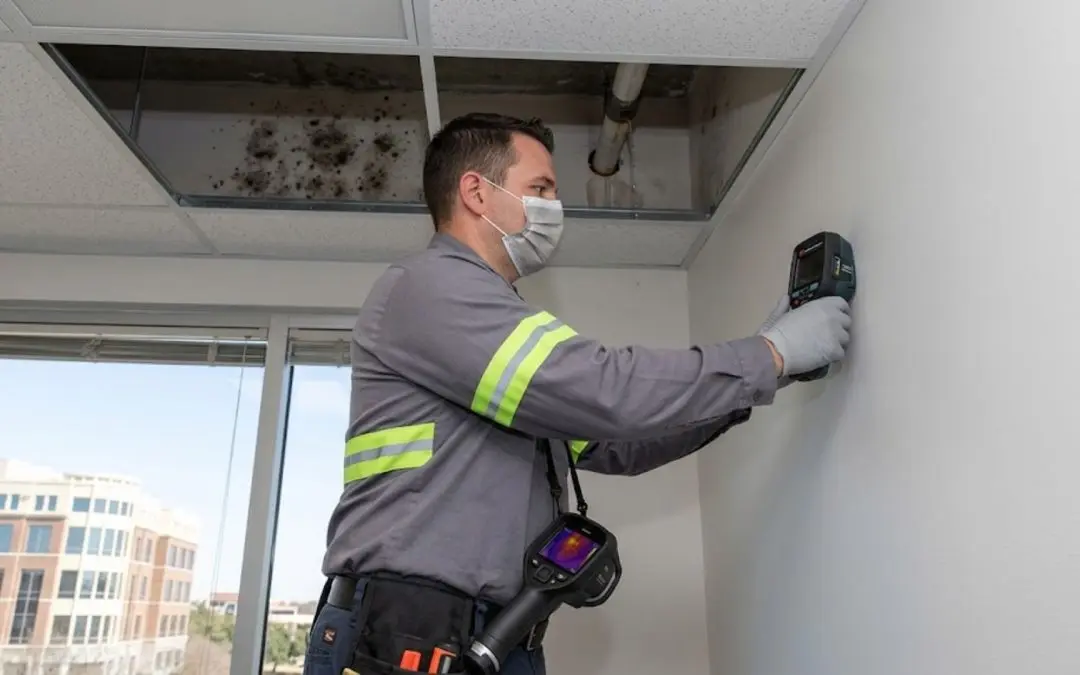
A tenant walks into an Addison office suite on a Monday morning and notices a musty smell near the break room sink. Nobody remembers a leak. The carpet looks dry. That’s often how commercial mold problems start, quietly, behind a wall or under flooring, long before anyone sees visible growth.
Mold in a commercial building isn’t just a maintenance issue. It can affect employee health, disrupt operations, and complicate lease agreements or insurance claims if it isn’t documented properly. A commercial mold inspection addison tx business owners schedule early is usually far less disruptive than one triggered by a full-blown outbreak.
This article walks through what a commercial mold inspection actually involves, the warning signs property managers and business owners should watch for, and what happens after mold is found. If you manage an office, retail space, or multi-tenant property in Addison, this is what to expect from the process, and when it’s time to bring in a professional team.
Why Commercial Properties in Addison Need Regular Mold Inspections
Commercial buildings tend to have more hidden mold risk than most owners realize. HVAC systems run for extended hours to keep large spaces comfortable, plumbing networks serve multiple units or tenants, and roofing spans a much larger area than a typical home. Any one of those systems can develop a small leak that goes unnoticed for weeks.
Addison’s mix of office parks, retail centers, and multi-tenant buildings along the North Dallas corridor means water intrusion in one unit can affect several others before it’s caught. A scheduled inspection catches these issues while they’re still isolated, rather than after they’ve spread through shared walls or ceiling cavities.
Regular mold inspections also matter for liability. If an employee or tenant raises a health concern related to air quality, having documented inspection records shows the property was actively monitored and maintained.
What Happens During a Commercial Mold Inspection
A thorough inspection isn’t a quick walkthrough. It’s a structured process built to find both visible growth and the conditions that could cause it.
1. Visual Assessment and Moisture Detection
The inspection starts with a walkthrough of the property, focusing on areas with a history of leaks, poor ventilation, or water exposure, such as restrooms, break rooms, mechanical rooms, and areas below roof penetrations. Moisture detection tools are used to check building materials for elevated moisture readings that wouldn’t be visible to the eye, since mold can be growing inside a wall cavity while the surface still looks dry.
2. Air Quality Sampling
When mold isn’t visible but occupants report odors or symptoms, air sampling can help identify elevated spore counts in the space. Samples are typically compared against outdoor air to determine whether indoor levels are unusual, giving property managers objective data instead of guesswork.
3. Reporting and Next Steps
After the inspection, findings are documented so the business owner or property manager has a clear record of what was found, where, and what it means. If remediation is needed, this report becomes the starting point for scoping the work, and it’s useful documentation to keep on file for insurance or tenant communication purposes.
Common Signs Your Addison Business May Have a Mold Problem
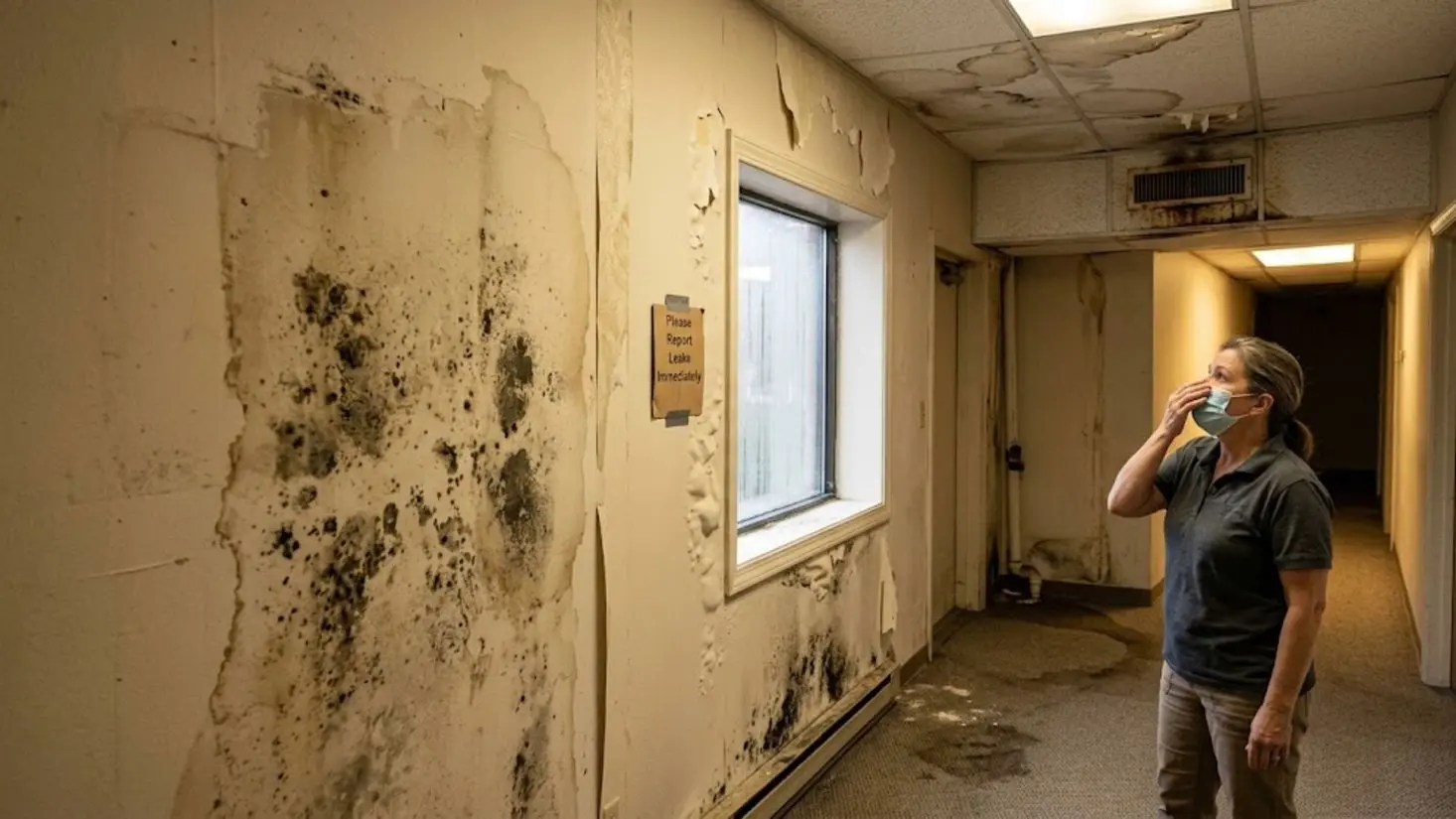
Some warning signs are obvious. Others are easy to dismiss as routine building quirks. Watch for:
- A persistent musty or earthy odor that doesn’t go away with cleaning
- Discoloration or staining on ceiling tiles, drywall, or baseboards
- Warped, bubbling, or peeling paint and wallpaper
- Condensation buildup on windows or HVAC vents
- Employees or tenants reporting headaches, congestion, or respiratory irritation that improves when they leave the building
- A recent or past history of roof leaks, plumbing failures, or flooding that wasn’t fully dried out
If more than one of these is present, it’s worth scheduling an inspection before scheduling a full remodel or repair, since fixing surface damage without addressing the mold underneath rarely solves the problem.
Mold Risks Tied to Addison’s Climate and Building Types
North Texas summers bring long stretches of heat and humidity, and commercial HVAC systems working overtime can generate condensation in ductwork and mechanical rooms if not properly maintained. Flat or low-slope commercial roofs, common on office and retail buildings in the area, are also more prone to ponding water after heavy rain, which can lead to slow leaks that go unnoticed for a while.
Older strip centers and office parks with shared roofing or plumbing systems carry an added risk: a leak affecting one tenant space can spread into neighboring units through common walls before anyone notices. This is part of why commercial inspections often extend beyond the unit reporting the issue.
What to Do If an Inspection Finds Mold
If mold is confirmed, the next step is mold remediation, not just cleaning the visible growth. We use a structured remediation process that includes containing the affected area, removing materials that can’t be safely restored, treating the space with antimicrobial cleaning, and drying the area fully before restoration work begins. Skipping any of those steps increases the chance mold returns.
Business owners should also loop in their insurance provider early, since coverage for mold remediation often depends on what caused the moisture in the first place. A documented inspection report makes that conversation easier.
Why Businesses Choose Professional Inspection Over DIY Testing
Store-bought mold test kits can tell you mold spores are present, but they can’t tell you where the source is, how far it’s spread, or whether the levels found are actually a concern. A professional inspection combines moisture detection tools with trained visual assessment to locate the source, not just confirm a suspicion.
For a business, that distinction matters. A DIY kit might confirm there’s a problem, but it won’t give you the information needed to plan repairs, communicate with tenants, or file an insurance claim with confidence.
Frequently Asked Questions
How long does a commercial mold inspection take?
Most commercial inspections take a few hours, depending on the size of the property and the number of areas flagged for closer review. Larger multi-tenant buildings or properties with a known leak history may take longer since more areas need to be checked.
Do I need an inspection if I don’t see visible mold?
Yes, if there are odors, past water damage, or occupant health complaints. Mold frequently grows inside walls, under flooring, or in HVAC systems before it’s visible on any surface, so the absence of visible growth doesn’t rule out a problem.
Will a mold inspection disrupt my business operations?
Inspections are generally non-invasive and can often be scheduled around business hours or after close. Most of the process involves visual assessment and moisture readings, which don’t require shutting down operations.
What happens after the inspection report is delivered?
If mold is found, the report outlines the scope so a remediation plan can be built around it. If no mold is found, the report still documents the property’s condition, which is useful for records and future reference.
Does insurance cover commercial mold inspections in Texas?
It depends on the policy and what caused the moisture. Coverage for issues like a sudden pipe burst is more common than for gradual issues like a slow roof leak, so it’s worth reviewing your policy or asking your provider directly.
Final Thoughts on Commercial Mold Inspection in Addison, TX
A commercial mold inspection is one of the more straightforward ways to protect a business from a problem that tends to get more expensive and more disruptive the longer it goes unnoticed. Catching a moisture issue early, before it spreads through shared walls or HVAC systems, almost always costs less than remediating a widespread outbreak later.
If your Addison business has noticed a musty odor, recent water damage, or occupant complaints that don’t have an obvious explanation, our team at All American Mitigation is available 24/7 to schedule an inspection and walk you through what we find. Reach us now for Commercial Mold Inspection to get started.
