
A homeowner in Addison notices a faint musty smell in the guest bathroom and starts wondering whether it’s worth paying for a professional to come look, or whether it’s something a store-bought test kit can handle. That question comes up a lot, and the honest answer depends on what’s actually going on behind the walls.
Mold inspection cost addison tx homeowners ask about isn’t a single flat number. Pricing depends on the size of the home, whether air sampling is needed, and how many areas need to be checked. Understanding what goes into that cost, and what you actually get for it, makes the decision easier.
This article breaks down what affects mold inspection pricing, what’s typically included, and how to tell whether your situation calls for a full inspection or something simpler.
What Factors Affect Mold Inspection Pricing
A few variables tend to move the price up or down more than anything else.
1. Home Size and Number of Areas Inspected
Larger homes take longer to inspect thoroughly, especially if there are multiple bathrooms, a basement, crawl space, or attic that all need to be checked. A single-room inspection following a known leak costs less than a whole-house assessment triggered by an unexplained odor with no obvious source.
2. Visual Inspection vs. Air Sampling
A visual inspection paired with moisture detection is usually less involved than one that also includes air quality sampling. Air sampling adds lab analysis time and cost, but it’s often the only way to confirm a mold problem when there’s no visible growth, just odor or health symptoms among household members.
3. Accessibility of the Problem Area
Mold hiding behind drywall, under flooring, or inside HVAC ductwork takes more time and sometimes specialized tools to properly assess than mold growing on an exposed surface. Homes with crawl spaces or older construction can also add time to the inspection.
What’s Typically Included in a Mold Inspection
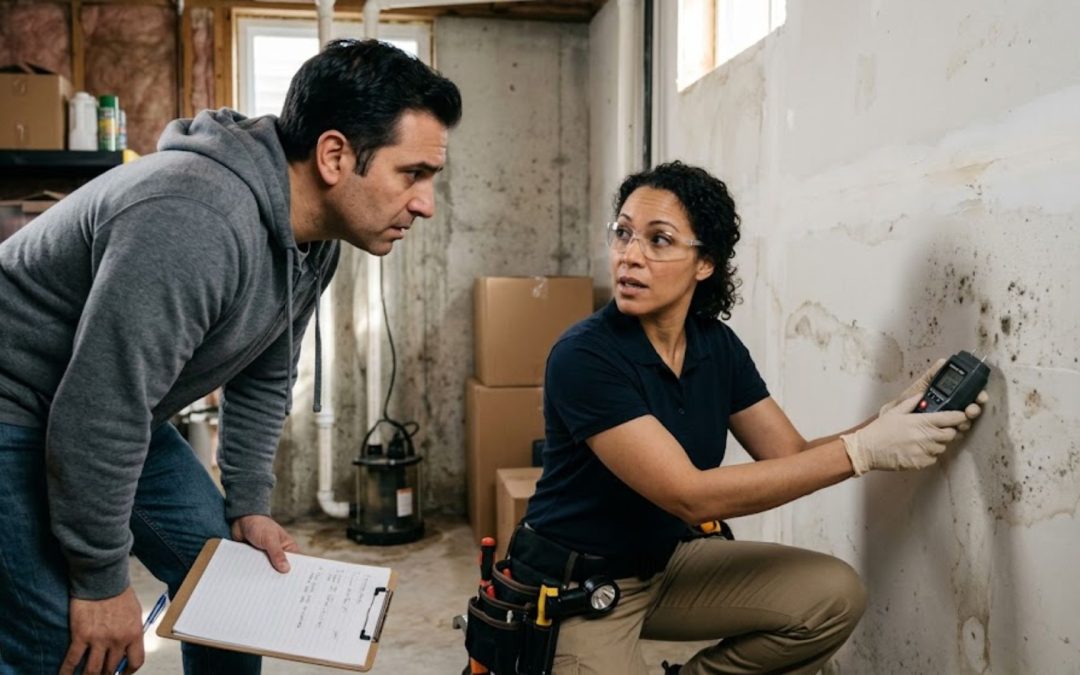
A proper inspection isn’t just someone walking through with a flashlight. It generally includes a visual assessment of areas prone to moisture, moisture readings taken with detection equipment on suspect materials, and a written report documenting findings. If air sampling is part of the service, that includes lab analysis and a comparison against outdoor baseline air.
The end result should give you a clear picture: where the moisture problem is coming from, whether mold is present, and what needs to happen next if it is.
When a Full Inspection Is Worth the Cost
Not every musty smell needs a full inspection. But certain situations make it worth the investment:
- You’ve had a past leak, flood, or plumbing failure that wasn’t fully dried out
- There’s a persistent odor with no visible source
- A household member has ongoing allergy or respiratory symptoms that improve away from home
- You’re buying or selling a home and want documentation of current conditions
- You’ve already attempted DIY cleaning and the mold or smell keeps coming back
If none of these apply and you can see and clean a small patch of surface mold on a hard surface, a full inspection may not be necessary yet.
DIY Test Kits vs. Professional Inspection

Store-bought mold test kits are inexpensive, but they have real limitations. Most only confirm that mold spores are present in a sample, which is true in nearly every home to some degree. They don’t identify the moisture source, how far the growth has spread, or whether the levels detected are actually elevated compared to normal background air.
A professional inspection combines moisture detection with a trained eye for where problems typically hide, behind baseboards, under sinks, near HVAC vents, and around window frames. That’s the difference between confirming mold exists and actually understanding the scope of the problem.
How Addison’s Climate Plays Into Mold Risk
North Texas summers bring extended heat and humidity, and homes that run air conditioning constantly can develop condensation issues around ductwork, window units, or poorly insulated areas. Heavy spring and summer storms common to the region can also cause roof or foundation leaks that go unnoticed until a musty smell shows up weeks later.
Homes with crawl spaces are particularly worth watching, since ground moisture combined with warm temperatures creates conditions mold can take hold in quickly if ventilation isn’t adequate.
What Happens If the Inspection Finds Mold
If an inspection confirms mold, the next step is remediation rather than just cleaning the visible spots. Our process includes containing the affected area, removing materials that can’t be safely restored, treating remaining surfaces with antimicrobial cleaning, drying the space thoroughly, and restoring anything that was removed. Mold can begin growing again within 24 to 48 hours if moisture isn’t fully addressed, so drying is as important as the cleanup itself.
If the moisture source was something like a burst pipe, it’s also worth checking your homeowner’s insurance policy, since coverage for water damage often depends on how the water got in.
How to Prepare for a Mold Inspection
A little preparation helps the inspection go faster and gives a clearer picture of the problem. Before the appointment, make a note of when you first noticed the odor or staining, whether there’s been any recent leak or flooding, and which rooms are involved. Clear access to areas like under sinks, around water heaters, and near HVAC vents so nothing needs to be moved during the visit.
If you’ve already tried cleaning a visible spot, avoid using bleach or heavy-duty cleaners right before the inspection, since strong odors can interfere with air sampling results if that’s part of the service.
Frequently Asked Questions
Is a mold inspection worth it if I can already see the mold?
It depends on how widespread it is. Small, isolated surface mold on a hard, non-porous surface may not need a full inspection, but larger areas or mold with an unclear source usually do to confirm how far it’s spread.
How long does a home mold inspection take?
Most residential inspections take one to a few hours depending on home size and how many areas need to be checked. Homes with a crawl space or known moisture history typically take longer.
Can I get a mold inspection before buying a house?
Yes, this is a common reason homeowners request one. An inspection before closing gives you documentation of the home’s current condition and flags any moisture issues before they become your responsibility.
Does homeowner’s insurance cover mold inspections?
It depends on the policy and the cause of the moisture. Sudden events like a burst pipe are more commonly covered than gradual issues like a slow roof leak, so it’s worth confirming directly with your insurer.
What’s the difference between mold inspection and mold testing?
Inspection focuses on visually identifying moisture sources and mold growth, while testing typically refers to air or surface sampling analyzed in a lab. Many inspections include both, depending on what the situation calls for.
Key Takeaways on Mold Inspection Cost in Addison, TX
Mold inspection pricing comes down to the scope of what needs to be checked, not a flat rate, so the real question isn’t just what it costs but what you’re getting for it. A thorough inspection gives you a documented, evidence-based answer instead of a guess from a test kit.
If you’re dealing with a lingering odor, recent water damage, or unexplained symptoms at home, our team at All American Mitigation is available 24/7 to schedule an mold inspection and explain exactly what we find. Call (945) 277-2488 to set up a time.
