
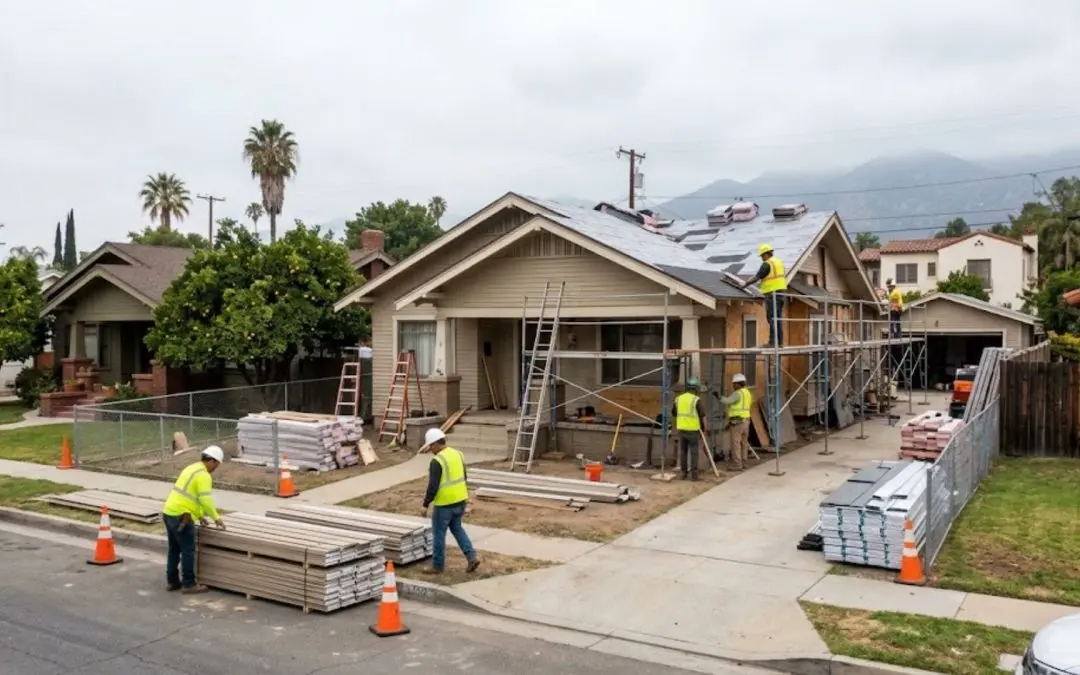
A burst slab leak or a kitchen fire doesn’t end the moment the water stops running or the flames go out. The real work, bringing a home or business back to a safe, livable condition, starts once the damage has been assessed and the mitigation phase is complete.
Reconstruction is the step that turns a gutted, drying-out property back into a functional space. Skipping it or rushing through it often leads to repairs that don’t hold up, or hidden problems that resurface months later.
This article walks through how reconstruction services work after fire or water damage in Redlands, CA, from the initial assessment to the final walkthrough, including what separates reconstruction from mitigation and how insurance typically fits into the process.
At All American Mitigation, our reconstruction services in Redlands cover both residential and commercial properties, and understanding the process ahead of time makes the experience far less overwhelming.
Mitigation and Reconstruction Are Two Different Jobs
Mitigation stops the damage from getting worse. It covers water extraction, structural drying, board-up, and the removal of smoke or soot residue. Reconstruction is a separate phase that rebuilds what was lost, including drywall, flooring, framing, cabinetry, and paint.
Many property owners assume one contractor handles both halves of the job. In practice, a lot of companies only do one or the other, which means a homeowner ends up coordinating between a mitigation crew and a separate construction crew. Working with a company that manages both prevents gaps in communication and reduces the chance that something gets missed between handoffs.
Assessing the Full Scope of Damage Before Rebuilding Starts
Before any rebuilding begins, the property needs a full assessment of what actually needs to be replaced versus what can be cleaned, dried, or repaired in place. This includes checking for structural damage to framing and subflooring, confirming moisture levels behind walls and under flooring with moisture meters and thermal imaging, and, after a fire, evaluating how far smoke and soot have traveled beyond the visible burn area
This step matters because closing up a wall over materials that are still wet, or painting over a surface that still holds soot residue, leads to problems that show up later: warped trim, lingering odor, or in the case of water damage, conditions that support mold growth. A thorough assessment before reconstruction begins protects the work that follows it.
How Reconstruction Works After Water Damage
Once water has been extracted and the structure has been dried, reconstruction addresses whatever couldn’t be salvaged during mitigation. The scope depends on how long the water sat and which materials it reached.
What Water Damage Reconstruction Typically Includes:
- Removing and replacing drywall and insulation that absorbed moisture
- Repairing or replacing subflooring and flooring materials
- Rebuilding cabinetry, baseboards, and trim damaged by standing water
- Repainting and refinishing affected walls and surfaces
- Confirming moisture levels are within a safe range before any wall is closed back u
For secondary water damage, such as water left behind after firefighting efforts, this process often runs alongside fire reconstruction rather than as its own separate project.
How Reconstruction Works After Fire Damage
Fire reconstruction tends to involve more structural work because heat and flame can compromise framing, roofing, and electrical systems in ways that aren’t always visible right after the fire is out. Smoke and soot also need to be fully addressed before any cosmetic repairs begin, or odor and staining can return even after a room looks clean.
Common Fire Reconstruction Tasks:
- Removing and replacing fire-damaged framing, drywall, or ceiling materials
- Repairing roofing, electrical, or HVAC components affected by heat
- Sealing surfaces to prevent lingering smoke odor from resurfacing later
- Repainting and restoring finishes throughout affected rooms
- A final cleaning and inspection pass before the space is ready to move back into
Reconstruction in Redlands’ Climate and Housing Stock
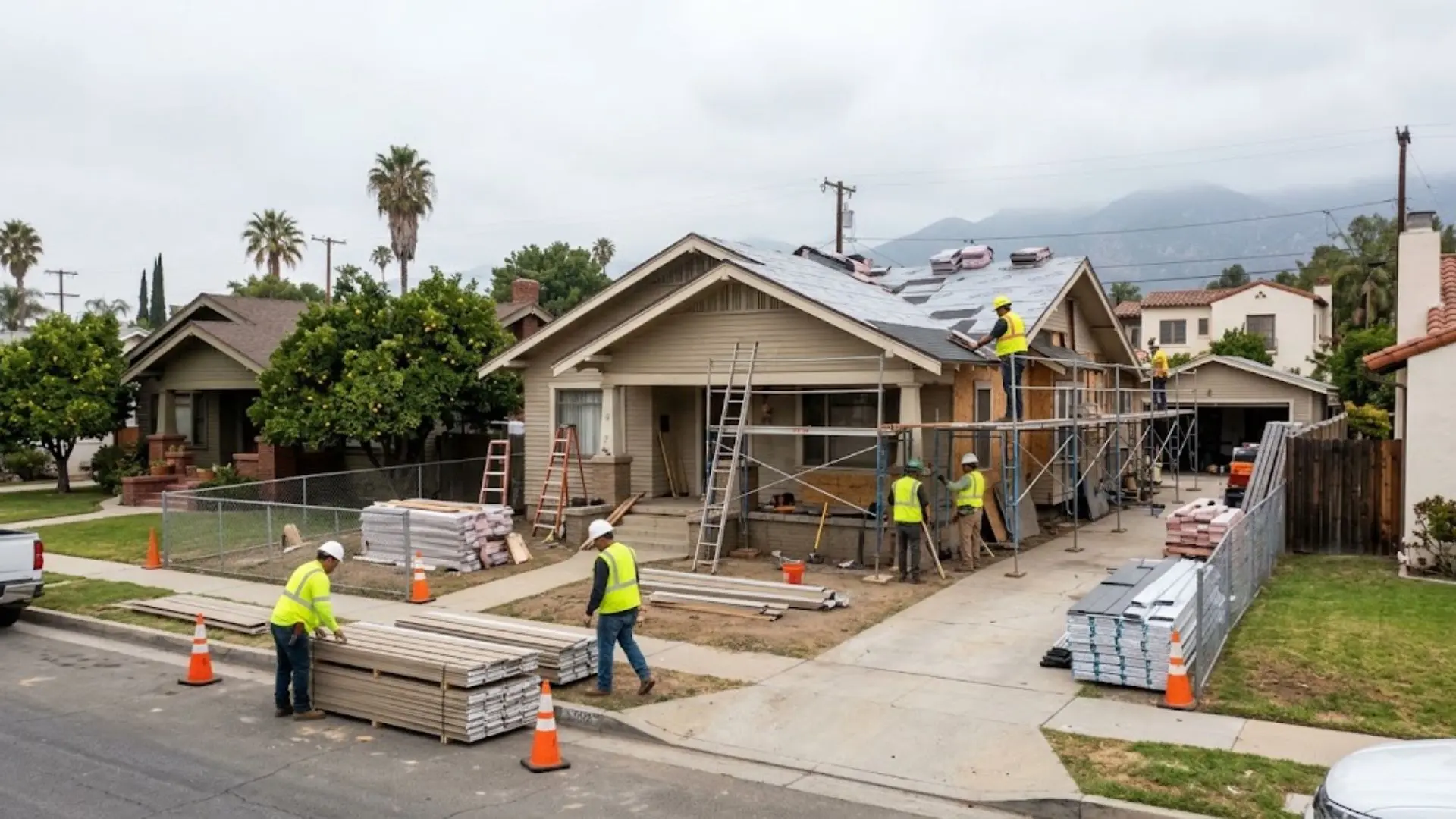
Redlands sits in the Inland Empire, where warm, dry summers and proximity to wildland areas make wildfire smoke exposure a real concern even for homes that weren’t directly touched by flame. At the same time, aging plumbing in older homes throughout the area, along with occasional storm runoff, means slab leaks and roof leaks remain common sources of water damage locally.
Because these two damage types often overlap here, a reconstruction plan built for Redlands needs to account for both moisture intrusion and smoke-related rebuilding, sometimes on the same project.
Working With Your Insurance Company During Reconstruction
Reconstruction after a covered loss usually involves an insurance claim, and the process goes more smoothly when the contractor is used to working directly with adjusters. Our team works closely with your insurance company throughout the reconstruction process, providing documentation, estimates, and updates so the claims side moves alongside the physical rebuild rather than holding it up.
This coordination matters most when the scope of the damage changes once walls are opened up. Framing that looks fine from the outside sometimes isn’t once it’s exposed, and having a contractor who can document that change for the adjuster keeps the project on track.
What to Expect When You Call All American Mitigation
The process starts with an on-site inspection to evaluate the damage and put together a clear estimate. From there, our team of IICRC-certified water damage specialists and reconstruction crews coordinates the rebuild phase so you aren’t managing multiple contractors on your own. We walk you through the plan before work starts and keep you updated as the project moves forward.
Frequently Asked Questions
How Long Does Reconstruction Take After Fire or Water Damage?
It depends on the scope of the damage. A single room with limited drywall and flooring replacement can take a couple of weeks, while a whole-structure rebuild after a significant fire can run several months, especially once insurance approvals are factored in.
Is Reconstruction Included With Mitigation, or Is It a Separate Service?
They’re related but separate phases. Mitigation stops and contains the damage, while reconstruction rebuilds what was lost. We handle both so the transition between them doesn’t create delays or communication gaps.
Will My Homeowners Insurance Cover Reconstruction After Fire or Water Damage?
Most policies cover sudden, accidental damage from fire or water, but coverage details vary by policy and cause of loss. We recommend reviewing your policy with your agent and letting us help document the damage for your claim.
What’s the Difference Between a Repair and a Full Reconstruction?
A repair addresses a specific, limited area, like one damaged wall. A full reconstruction involves rebuilding multiple systems or rooms, often including structural elements, and is typically needed after more extensive fire or water events.
Do I Need to Move Out of My Home During Reconstruction?
It depends on which areas of the home are affected and whether utilities are functional. Smaller, contained projects often allow you to stay, while larger rebuilds affecting kitchens, bathrooms, or structural areas may require temporary relocation.
Can Mold Found During Reconstruction Be Addressed at the Same Time?
Yes. If mold is discovered once walls or flooring are opened up, it should be addressed before reconstruction continues, since closing materials back up over active mold growth creates a bigger problem later.
Final Thoughts on Reconstruction Services in Redlands, CA
Reconstruction is what actually gets a Redlands home or business back to normal after fire or water damage, but it only works well when it follows a thorough assessment and connects directly to the mitigation that came before it. Rushing the rebuild, or hiring separate companies for each phase, tends to create the exact problems reconstruction is supposed to solve.
If your property in Redlands needs reconstruction after fire or water damage, call All American Mitigation at (909) 639-6160 to schedule an on-site inspection and get a clear plan for getting your space rebuilt the right way.
