
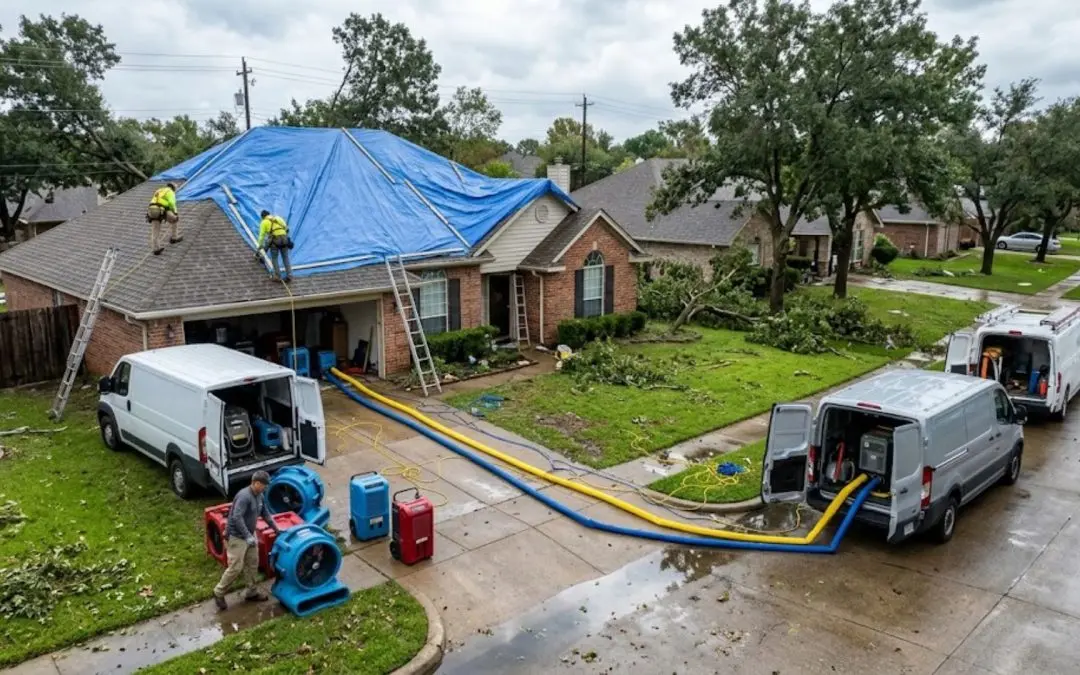
A ceiling stain that shows up a day or two after a storm rolls through Addison is rarely the whole story. By the time water is visible indoors, it has usually already been moving through the roof deck, attic insulation, and interior framing for hours.
North Texas sees its share of severe spring and early-summer storm systems, and high wind and hail events can compromise roofing materials in ways that are not always obvious from the ground. This article looks at how roof leaks develop after a storm, why water mitigation needs to happen quickly, and how our team at All American Mitigation approaches storm-related water damage in Addison homes and businesses.
If you have an active roof leak after a storm, call our Addison, TX team so mitigation can start before the damage spreads further.
How North Texas Storms Lead to Roof Leaks
Addison sits in a part of the state that regularly experiences strong thunderstorms, straight-line winds, and hail, particularly during the spring storm season. These conditions can damage shingles, flashing, and seals around vents and chimneys without causing obvious exterior signs.
A roof does not need major visible damage to start leaking. Wind can lift shingles just enough to break their seal, hail can create small cracks that worsen with each additional rain, and flashing around chimneys or roof penetrations can pull loose during high winds. Once any of these openings exist, water finds its way into the attic and begins moving downward through insulation, ceiling drywall, and sometimes into wall cavities.
Signs a Storm Has Caused a Roof Leak
Some storm-related leaks are obvious. Others take days to show up and are easy to miss until the damage has already spread.
Watch for:
- Ceiling stains or discoloration that appear after a storm
- A musty smell in rooms near the roofline
- Soft or sagging spots on ceilings
- Visible water dripping from light fixtures or vents
- Missing, cracked, or curling shingles visible from the ground
- Granules from shingles collecting in gutters or downspouts
Any one of these is a reason to have the roof and attic checked, even if the leak seems minor at first.
Why Storm-Related Water Mitigation Can’t Wait
A roof leak behaves differently from a plumbing leak because it often continues every time it rains until the roof itself is repaired. That means a property can experience repeated moisture intrusion over several storm events before anyone addresses the underlying damage.
Attic insulation that gets wet loses much of its effectiveness and is slow to dry on its own, even in warm North Texas weather. Ceiling drywall that absorbs water repeatedly is more likely to need full replacement rather than drying and repair. And because attics are enclosed, humid spaces, they are especially prone to developing mold if moisture is not addressed quickly after each intrusion event.
Our Storm Damage Water Mitigation Process
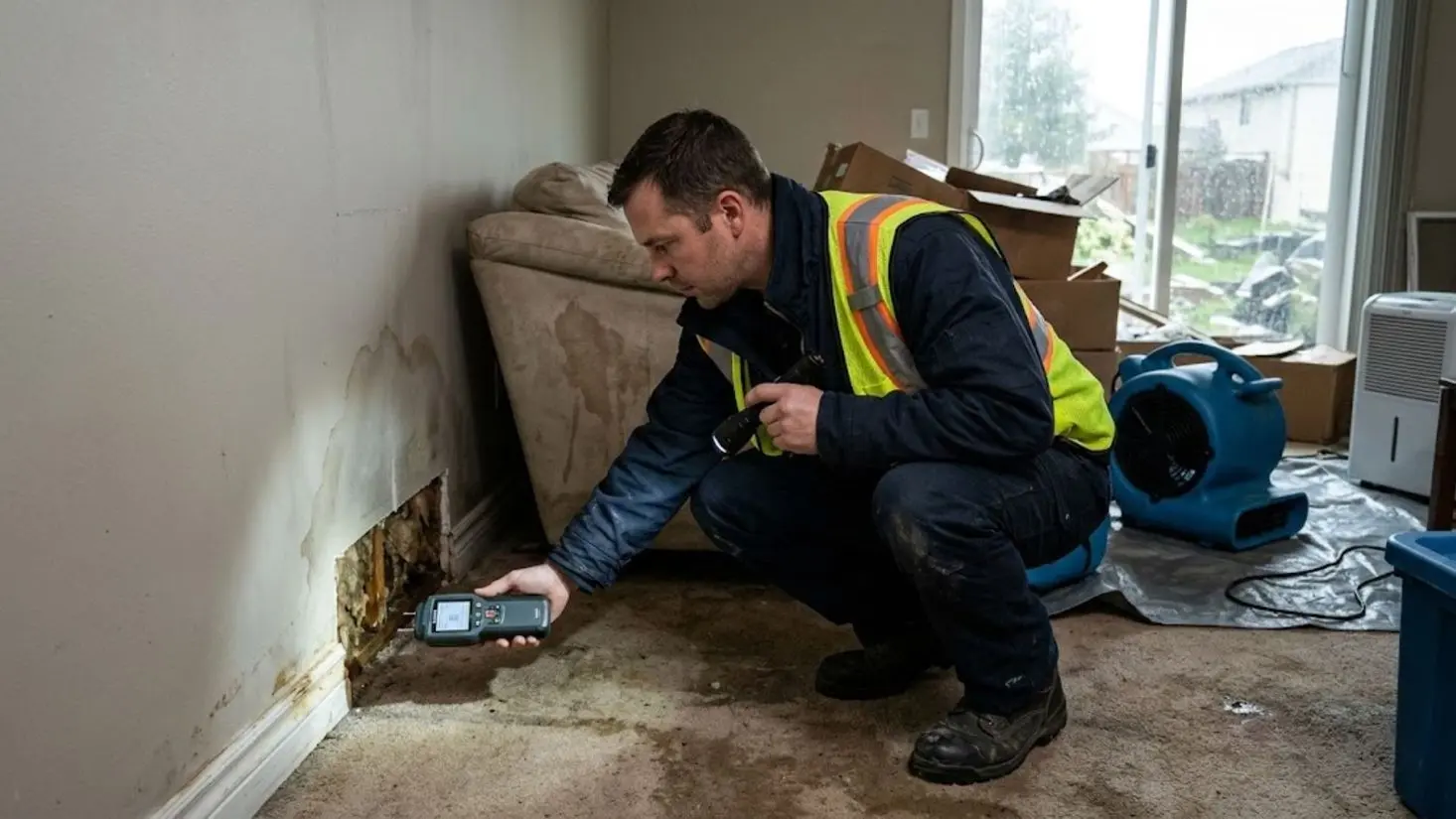
Our approach to storm-related water damage addresses both the active leak and the moisture that has already worked its way into the structure.
- Full Assessment: Inspect the attic, insulation, ceiling drywall, and walls near the leak path, since storm water can spread beyond the visibly affected room.
- Water Extraction and Structural Drying: Remove standing water and use commercial dehumidifiers and air movers to dry affected materials, especially insulation and framing that may retain trapped moisture.
- Moisture Detection: Use thermal imaging and moisture mapping to identify hidden water damage, as roof leaks can travel along framing before dripping through the drywall.
- Moisture Monitoring and Mold Prevention: Monitor humidity and moisture levels throughout the drying process and address potential mold risks if elevated moisture is detected in the attic or wall cavities.
- Reconstruction and Repairs: Once the property is dry, coordinate necessary repairs to damaged drywall, insulation, and ceiling materials. Homeowners should arrange roof repairs through a licensed roofing contractor.
What to Do After Discovering a Storm-Related Leak
- Place a bucket or tarp under active drips to limit interior damage
- Move furniture and belongings away from the affected area
- Photograph ceiling stains, drips, and any visible roof damage from the ground
- Avoid walking on the roof yourself, especially after a storm
- Contact a water mitigation team as soon as the leak is discovered, even if it seems minor
Commercial Properties and Storm Damage
Office buildings, retail spaces, and multi-tenant properties throughout the North Dallas area face the same storm-related roof risks as homes, often on a larger scale. A single roof leak in a commercial building can affect multiple tenant spaces, ceiling tiles, and HVAC systems before it is caught. Our team works with commercial property owners and managers throughout Addison to assess storm damage across larger roof areas and coordinate mitigation that minimizes disruption to tenants and operations.
Insurance Considerations for Storm Damage Claims
Storm damage claims often involve both the roofing repair itself and the interior water mitigation that follows, which may be handled as separate line items by an insurer. Documenting the timeline of the storm, the interior damage, and the mitigation steps taken helps support a complete claim.
We provide insurance documentation support throughout the mitigation process, which can help property owners communicate the full scope of water intrusion to their adjuster alongside any roofing-related claim.
Frequently Asked Questions
How Long After a Storm Can a Roof Leak Show Up?
A roof leak can appear within hours or take several days to become visible indoors. Water often travels along attic framing before it reaches drywall, so a delay between the storm and the first visible stain is common.
Does a Roof Leak Always Mean the Roof Needs Full Replacement?
Not necessarily. The extent of roof damage depends on the storm and the roof’s condition beforehand, and a licensed roofer can determine whether repairs or full replacement are needed. Water mitigation addresses the interior damage regardless of which repair path the roof itself requires.
Can Wet Attic Insulation Be Dried Instead of Replaced?
It depends on how saturated the insulation is and how long it stays wet. Lightly affected insulation can sometimes be dried, while heavily saturated insulation often needs to be removed and replaced to prevent mold and restore its effectiveness.
Is Storm Damage Covered by Homeowners Insurance?
Most policies cover sudden storm damage such as wind and hail, though coverage specifics vary by policy. Many claims involve both a roofing component and a separate interior water damage component.
What Happens If a Storm Leak Is Left Untreated?
Continued moisture intrusion increases the risk of mold growth, weakens ceiling and attic materials over time, and typically raises the total cost of repair the longer it goes unaddressed.
Key Takeaways on Storm Damage Water Mitigation in Addison, TX
Roof leaks after a North Texas storm rarely stay contained to one spot, and the real damage is often happening in the attic and framing long before a ceiling stain appears. Addressing both the visible leak and the hidden moisture quickly is what keeps a storm event from turning into a larger structural or mold problem.
If a recent storm has left your Addison home or business with a roof leak, our team at All American Mitigation can assess the interior damage, begin extraction and drying, and support your insurance claim while you coordinate roof repairs. Call to reach our Addison, TX team.
