
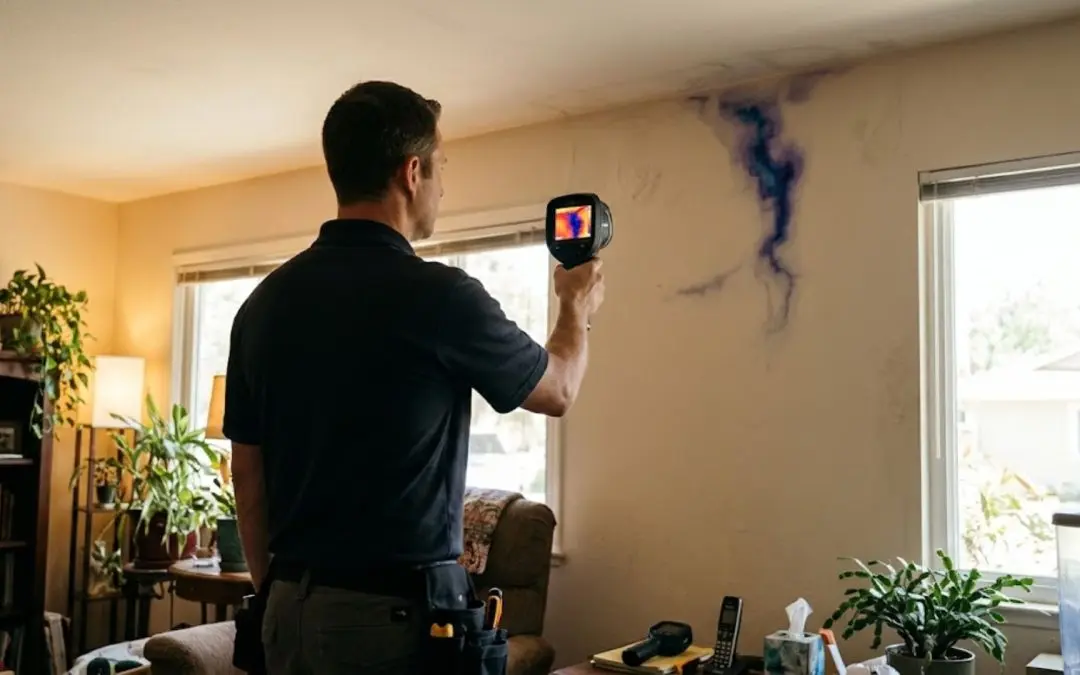
A ceiling stain or a slightly soft spot in the flooring is usually the first sign something is wrong, but by the time water damage is visible, it’s often been building for a while behind the surface. Water doesn’t stay where it lands. It travels along framing, soaks into insulation, and spreads under flooring long before a homeowner notices anything.
That gap between when water damage starts and when it becomes visible is exactly where thermal imaging and moisture detection matter most. Finding moisture before it causes visible damage, or mold, makes the difference between a quick repair and a much larger project.
This article explains how thermal imaging works, what it can and can’t tell you about water damage, and how it fits into a complete moisture detection process for Redlands, CA homes.
Our water damage restoration process includes thermal imaging and moisture detection as a standard part of identifying the full scope of a water loss, not just the parts that are easy to see.
What Thermal Imaging Actually Detects
Thermal imaging cameras read surface temperature differences, not moisture directly. Wet materials tend to show up as cooler areas on a thermal image because evaporating moisture pulls heat from the surface. That temperature difference lets a technician see patterns that suggest where water has traveled, even behind drywall or under flooring.
This is why thermal imaging works best as a mapping tool. It shows where to look more closely, rather than confirming moisture on its own. A cool spot on a thermal camera could mean trapped water, but it could also be explained by something unrelated, like an air draft or insulation gap.
Why Moisture Meters Are Used Alongside Thermal Imaging
Because a thermal camera identifies temperature patterns rather than moisture content itself, it’s paired with moisture meters to confirm what’s actually happening inside a material. A moisture meter measures the water content of a specific surface directly, giving a reading that thermal imaging alone can’t provide.
Used together, the two tools let a technician scan a large area quickly with the thermal camera, then verify suspicious spots with a moisture meter before deciding what needs to be opened up, dried, or replaced.
Where Hidden Water Damage Commonly Shows Up
Water tends to collect and travel in predictable places, which is part of what makes thermal imaging useful for scanning a property efficiently.
- Behind baseboards near exterior walls, where slab leaks or plumbing leaks often travel
- Under flooring near bathrooms, kitchens, and laundry areas
- Inside wall cavities below window sills after roof or window leaks
- Ceiling areas beneath bathrooms or HVAC lines on upper floors
- Around the base of water heaters and appliance supply lines
Why Finding Hidden Moisture Early Matters
Moisture that goes undetected doesn’t stay contained. It continues to soak into framing, drywall, and insulation, and the longer it sits, the more material ends up needing replacement instead of simply drying out.
There’s also a mold risk. Conditions that support mold growth can develop within a day or two once materials stay damp, which means catching moisture early isn’t just about limiting repair costs. It also reduces the chance that a water issue turns into a mold issue that requires its own remediation process.
How Thermal Imaging Fits Into the Water Damage Restoration Process
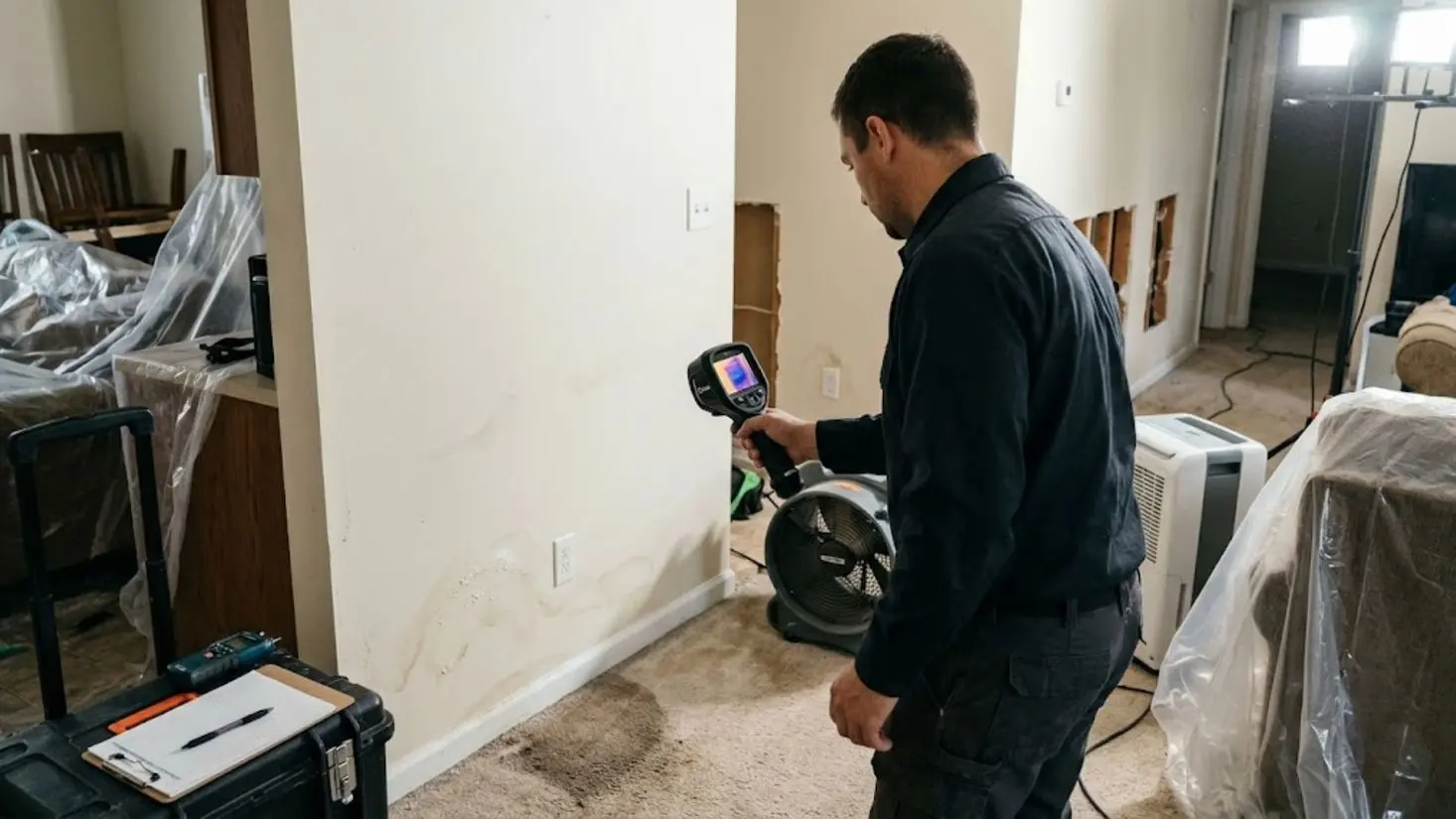
Thermal imaging and moisture detection typically happen early in the restoration process, right after the initial inspection and before drying equipment is placed. Scanning the property first helps determine exactly which areas need drying equipment and which materials may need to be removed rather than dried in place.
The same tools get used again during the drying phase to confirm that moisture levels have actually returned to normal before equipment is pulled and the space is considered dry. Without that verification step, it’s possible to remove drying equipment while moisture is still present in less accessible areas like wall cavities.
Why This Matters More in Redlands and the Inland Empire
Many homes in the Redlands area have slab foundations, which means a slab leak can send water laterally for several feet before it ever reaches a visible crack in flooring or a wall. That lateral movement is exactly the kind of hidden spread that a visual inspection alone can miss, and where thermal imaging adds real value in confirming how far water has actually traveled before drying work begins.
Seasonal patterns play a role too. Winter storm runoff can push water into roof lines and window areas that stay dry the rest of the year, while aging plumbing in older homes throughout the Inland Empire tends to develop slow leaks that go unnoticed until a scan picks up the temperature pattern. In both cases, the damage usually starts well before anyone in the home realizes there’s a problem at all.
Frequently Asked Questions
Can Thermal Imaging Detect Mold Directly?
No. Thermal imaging detects temperature differences associated with moisture, not mold itself. It can help identify damp areas where mold is more likely to develop, but a visual or lab inspection is needed to confirm actual mold growth.
Is Thermal Imaging Accurate Through Walls and Flooring?
It reads surface temperature, so it can pick up patterns caused by moisture behind walls or under flooring, but results are interpreted alongside moisture meter readings rather than relied on alone.
How Long Does a Thermal Imaging Inspection Take?
A typical residential inspection takes a relatively short amount of time to scan affected areas, though the exact time depends on the size of the property and how many areas need to be checked.
Will I Need to Remove Drywall or Flooring Based on the Scan?
Only if moisture is confirmed in that area. Thermal imaging and moisture meters help target exactly where removal is necessary instead of opening up more of the structure than needed.
Does Insurance Cover Thermal Imaging as Part of a Water Damage Claim?
Moisture detection is typically considered part of the water damage assessment process, and many policies that cover water damage restoration also cover the inspection methods used to assess it. Reviewing your specific policy is the best way to confirm.
Can I Use a Consumer Moisture Meter Instead of a Professional Inspection?
Consumer meters can detect obvious surface moisture, but they don’t provide the broader mapping that thermal imaging offers, which means hidden moisture outside the area you happen to check can easily go unnoticed.
Key Takeaways on Thermal Imaging and Moisture Detection in Redlands, CA
Hidden water damage causes the most expensive problems precisely because it stays hidden, building behind walls and under flooring while a home looks fine on the surface. Thermal imaging paired with moisture meters is how that hidden moisture gets found before it turns into a larger repair or a mold problem.
If you suspect a hidden leak or want confirmation that a past water event was fully dried out, call All American Mitigation to schedule a thermal imaging and moisture detection inspection for your Redlands home.
